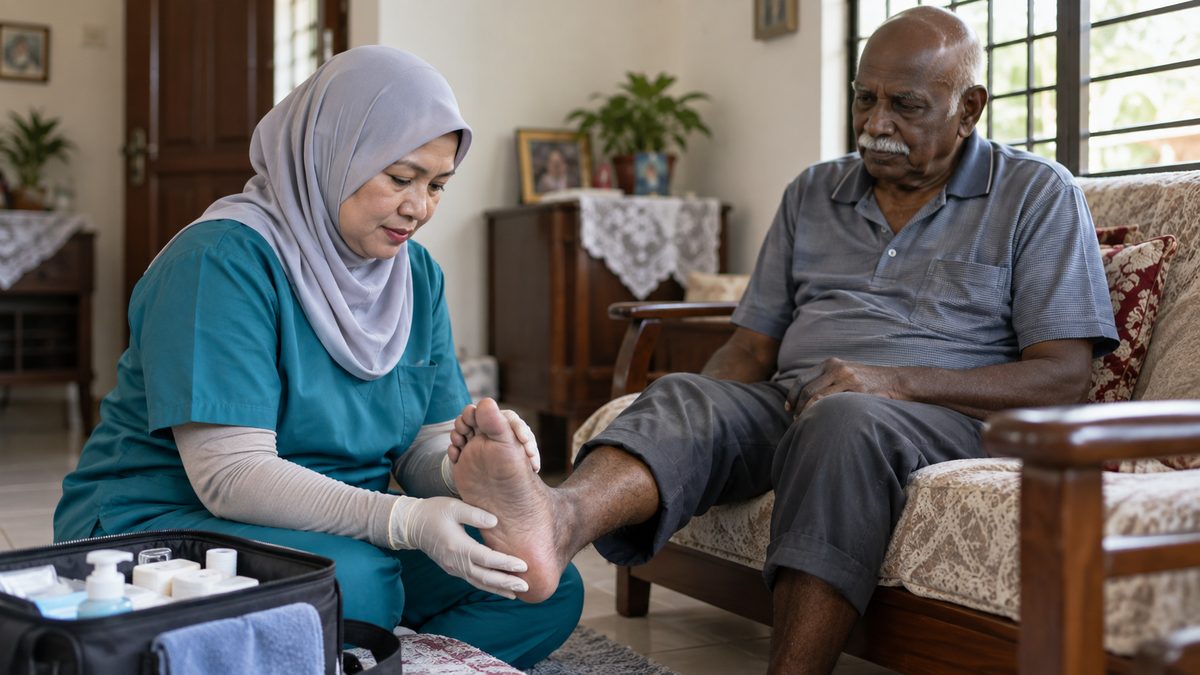
For someone with diabetes, a small cut or blister on the foot is never “just a small wound”. Left alone, it can turn into a diabetic foot ulcer, which is an open sore that heals slowly and can get infected.
Most foot problems like this can be prevented, and the habits that prevent them only take a few minutes a day. Below, you’ll see why these ulcers happen, how to look after your feet, which signs mean you should see a doctor, and where hyperbaric oxygen therapy sometimes fits in.
Why Your Feet Are at Risk
High blood sugar over a long time affects the body in two ways that matter a lot for your feet.
First, it can damage the nerves in your feet. Doctors call this diabetic neuropathy. You may stop feeling pain, heat or even a small stone in your shoe, so a wound can form without you noticing.
Second, diabetes can narrow the blood vessels. Less blood reaches the feet, which means wounds get less oxygen and heal more slowly.
Put those two together and you can see the problem. If you can’t feel a wound and it heals slowly, something tiny can become serious before you realise it.
A Few Minutes a Day for Your Feet
Look at them properly
Check the top, bottom and sides of both feet every day, and between your toes too. You’re looking for cuts, blisters, redness, swelling or cracked skin. If you can’t see the soles, use a mirror or ask someone at home to help. Doing it after your evening shower makes it easy to remember. If something looks different from yesterday, take note of it and keep an eye on it.
Wash, dry and moisturise
Wash your feet daily in lukewarm water, never hot. Test the water with your elbow first, because your feet may not sense heat well. Dry them gently, especially between the toes, where damp skin can cause problems. A simple moisturiser helps stop dry skin from cracking, but keep lotion away from the spaces between your toes.
Trim nails with care
Cut toenails straight across and smooth the edges with a nail file. If your nails are thick or hard to cut, or your eyesight isn’t great, ask a healthcare professional to do it for you.
Rethink going barefoot
Lots of us walk barefoot at home or wear thin slippers to the pasar. For people with diabetes, proper footwear is safer, even indoors. A hot floor, something sharp on the ground or a walk on the beach sand can all lead to injuries.
Shoes and socks that fit
Your shoes should fit well and not rub. Before putting them on, feel inside for stones or rough spots. Clean, dry socks without tight bands are the best choice. If you’re buying new shoes, go shopping later in the day, when feet tend to be a little bigger, and break them in slowly at home before wearing them out for long.
Keep blood sugar in check
Good blood sugar control helps your body heal and protects your nerves and blood vessels. Take your medicine as prescribed, eat balanced meals and stay active. If you smoke, stopping will help your blood flow too.
Signs That Mean You Should See a Doctor Now
Some changes shouldn’t wait. Get medical help quickly if you notice any of these:
- A wound or blister that isn’t getting better
- Redness, warmth, swelling, pus or a bad smell around a wound
- Skin turning dark or black
- Fever or feeling unwell along with a foot wound
New pain, numbness or tingling in your feet is also worth raising with your doctor. Treating a problem early gives you the best chance of healing. Please don’t rely only on traditional remedies at home for a serious wound. Get proper medical advice first.
What Treatment Usually Looks Like
Treatment depends on how deep the ulcer is and whether it’s infected. Your doctor or wound care team will often clean the wound and remove dead tissue so healthy tissue can grow. Special dressings then keep it clean and moist.
Taking pressure off the foot matters a lot as well. That might mean special shoes, a cast or crutches for a while. If there’s an infection, you may be given antibiotics. Some people need a procedure from a specialist to improve blood flow to the foot. All through this, better blood sugar control, with help from your doctor or diabetes educator, supports the healing.
Where HBOT Comes In
Some wounds stay slow to heal even with good standard care. For these, doctors may consider hyperbaric oxygen therapy, or HBOT.
You breathe pure oxygen inside a chamber where the air pressure is higher than normal. This lets your blood carry more oxygen to the wound, which can support healing and help the body fight infection.
HBOT isn’t used for every diabetic foot ulcer. It’s added alongside normal wound care, never used in place of it. Your doctor looks at the type and depth of the wound, your blood flow and your general health, and then decides if it’s suitable for you.
If your doctor does recommend it, you can search this directory of hyperbaric oxygen therapy centres at hyperbaricoxygen.my. It lists centres across Malaysia by state and by type, including public hospitals and specialised HBOT clinics.
There’s one more thing to know if you use insulin. Blood sugar can drop during HBOT, so tell the team before you start. They may check your levels before and after each session. The treatment itself usually isn’t painful, though you’ll feel pressure in your ears as the chamber pressure changes, much like on a flight.
If you’d like to go deeper, Telehealth Malaysia has a clear guide on how a small diabetic wound becomes a serious problem. It’s written for Malaysian readers and explains the risks in simple language.
Every serious foot ulcer starts as something small, and that’s exactly why the daily foot check is worth your time. Make it as normal as brushing your teeth. And if a wound isn’t healing, don’t wait for it to sort itself out. See your doctor or diabetes clinic early and let them decide on the next steps for your feet.