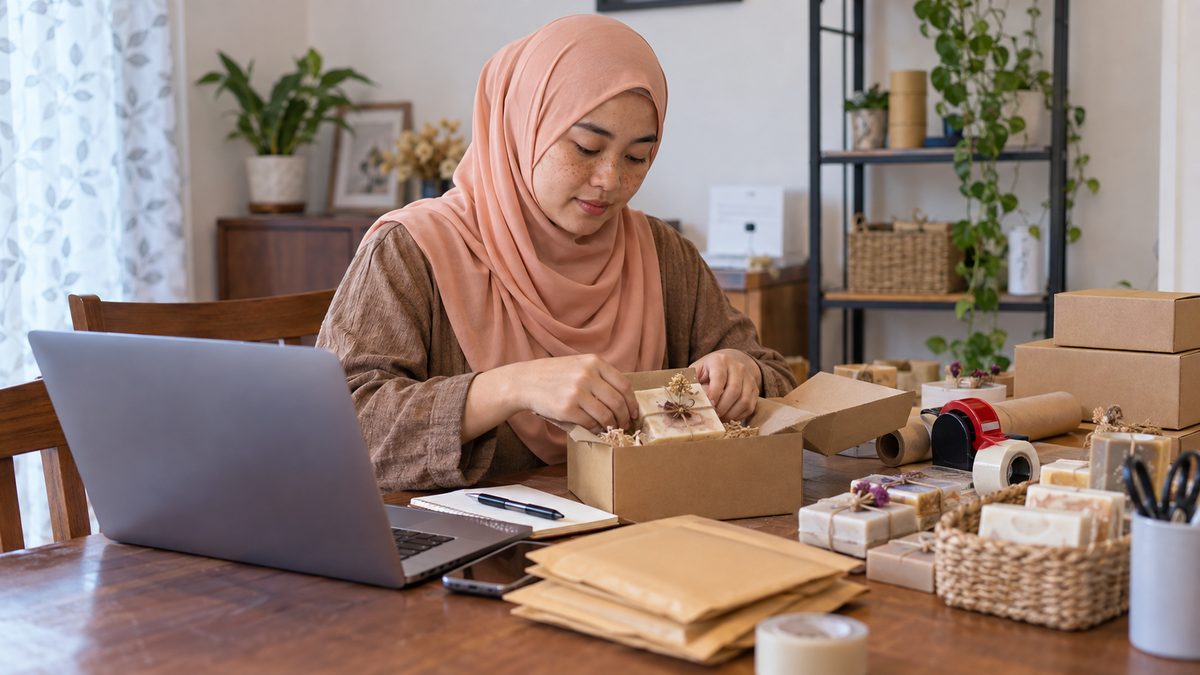
Lots of Malaysians would love to earn some extra income without leaving the house. Maybe you make great kuih, or maybe friends keep asking you to design their posters. You can start online business from home with a clear plan, a phone and a little time each day. You don’t need a shop lot or a big team.
It won’t happen overnight, though. The steps below are simple, but they take patience. Go through them one at a time and you’ll end up with a business that stands on solid ground.
Start With What You Already Do Well
The best idea is one you can keep doing for years, not weeks. So look at your own skills, interests and daily routine first. What do people already ask you to help them with? That’s often a good clue.
For some people it’s food, like cookies, sambal or frozen snacks for busy families. Others are good at tutoring, writing or graphic design and can sell their time as a service. You could also resell products from a trusted supplier, make handmade items like candles and accessories, or sell digital products such as templates and online classes.
Pick one idea and stick with it for now. If you chase three ideas at once, you’ll probably end up doing all of them badly.
Will Anyone Actually Buy It?
Before you spend a single sen, check that people want what you’re selling. A lovely idea doesn’t help much if nobody will pay for it. A few quick checks will tell you a lot:
- Search for your product on Shopee, Lazada and social media. Are there other sellers, and do buyers leave reviews?
- Read what customers complain about in those reviews. Those gaps could become your selling point.
- Ask friends and colleagues if they’d buy it, and ask them to be honest rather than polite.
- Make a small test batch and sell it to a handful of people first.
If the response is quiet, change your idea. It’s much cheaper to adjust now than after you’ve bought a lot of stock.
Know Your Numbers
You don’t need a thick business plan. You do need to know what everything costs. Write down every expense involved in making and delivering one item: materials, packaging, delivery and any platform fees.
Platform fees change from time to time, so check the current seller fees before you decide on a price. Your price should cover all your costs and still leave a fair profit. It’s tempting to go very cheap to beat other sellers, but that usually leaves you tired and out of pocket after a few months.
Keep a simple record of money in and money out. A notebook or a free spreadsheet is fine at the start. What matters is that you update it every week.
Fitting It Around Your Day Job
Many people start a home business while still working full time, and that’s perfectly fine. The trick is to treat it like a real commitment. Set fixed hours each week, maybe two evenings and a Saturday morning, and protect that time.
Tools help too. WhatsApp Business lets you set up quick replies for common questions, so you’re not typing the same answer twenty times a day. Batch your work where you can: pack all orders in one go, and plan a week of social media posts in a single sitting.
Sort Out the Paperwork Early
Customers trust a business that’s set up properly. In Malaysia, most businesses need to be registered, so check the current rules with the Companies Commission of Malaysia (SSM) to see which type of registration suits you.
Selling food? You may need extra approvals and a food handling course too. Your local council or health office can tell you the latest guidelines. It also helps to open a separate bank account for the business, so your personal money and business money don’t get mixed up.
Where Should You Sell?
There are more choices than ever, and each one works a little differently. Marketplaces like Shopee and Lazada already have lots of buyers, and setting up is fairly easy. The downside is that you’re competing with a long list of other sellers, often on price.
Social media is different. On Facebook, Instagram or TikTok you can show your face, share how things are made and build a real connection with customers. WhatsApp Business is handy for taking orders and answering questions quickly, which many Malaysian buyers prefer anyway. Your own website gives you full control over your brand, but you’ll have to work harder to bring visitors in.
Most small sellers start with one or two channels. Once you’ve found your rhythm, you can add more.
Make Your Shop Look Trustworthy
Buyers can’t touch your product online, so your shop page has to do that job for them. Before you go live, run through this list:
- Bright, clear product photos from a few angles
- Honest descriptions with size, material and how to use it
- Delivery areas and how long delivery usually takes
- A simple return or refund policy
- Contact details that make it easy to reach you
Choose a business name that’s easy to spell and remember, then use the same name and logo everywhere. A shopper who finds you on TikTok should recognise you straight away on Shopee.
Getting That First Order
The first sale is usually the hardest. Start with the people who already know you. Share your shop with family and friends, and ask them to pass it on to their own group chats.
After that, keep showing up online. Post regularly about how your product is made, how to use it or what problem it solves. Reply to every message quickly and politely, even the ones that only ask “still available?”.
When an order comes in, pack it neatly. A tidy parcel with a short thank-you note makes people want to buy again. Then ask for an honest review, because reviews are what help strangers trust you.
You’ll make mistakes along the way. A batch will flop, a parcel will go missing, a post will get no likes. That happens to every small business, so don’t take it as a sign to quit. Fix what you can, keep notes on what worked, and give yourself a few months before you judge how it’s going.