Renovating the office, hiring a cleaning company, getting the aircond serviced: sooner or later you’ll ask someone for a quotation. A quotation is a written offer that says what a provider will do and how much it’ll cost. If you know how to compare quotations properly, you’ll pick better providers and get far fewer nasty surprises halfway through the job.
Most people just look at the total at the bottom and go with the lowest number. That’s often a mistake. Two quotations can look almost the same and still cover very different work.
It Starts With Your Brief
A brief is a short description of what you need. Give every provider the same brief and their quotations become much easier to compare. Keep it vague, and each one will fill in the gaps with their own guesses.
Write down what work you need done, where it is and roughly how big the job is. Add when you’d like it to start and finish, any materials, brands or quality levels you prefer, and any rules from your building management about working hours or noise. Include the best way and time to reach you.
If you can, invite providers to come and see the site. They’ll give a more accurate price, and you get to see how they behave. Do they turn up on time? Do they ask sensible questions? That tells you a lot.
Get More Than One
Aim for at least three quotations. That gives you a feel for what’s normal for the job. If one comes in much higher or much lower than the rest, ask why. Sometimes there’s a good reason. Sometimes there isn’t.
Make sure every quotation is written down. A price quoted over the phone or on a WhatsApp voice note is easy to forget, and even easier to dispute later. A proper quotation should show the company name, registration details, a contact person and the date it was issued.
Give everyone the same deadline to send their quotation back, and keep all of them in one folder or email thread. When you’re juggling a busy week, it’s easy to lose track of who sent what. Having them all in one place also stops you from comparing a detailed quotation from last month with a rough one from yesterday. If a provider asks for more time, that’s fine, just let the others know too so it stays fair.
Line Them Up Side by Side
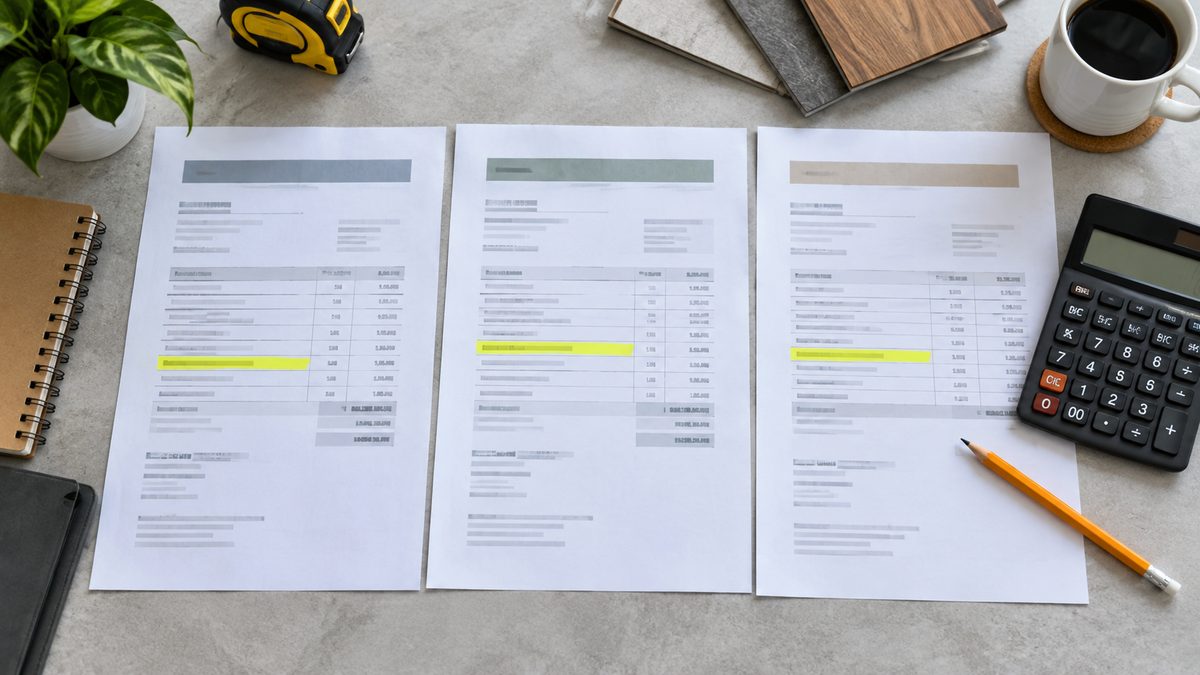
This is where most of the real comparing happens. Put the quotations next to each other and go through them item by item. A lower total very often means something has been left out.
Start with the scope of work. Is each task described clearly, or is it one vague line like “general repair works”? Then look at materials. Are the brand, type and quality stated? After that, check whether labour, transport and delivery are included or charged separately. Ask who removes the rubbish at the end and leaves the place tidy. And if any approvals from building management or the local council are needed, find out who handles them.
A simple trick helps here. Make one list of every item across all the quotations, then tick which provider includes what. The gaps jump out straight away.
The Small Print Matters
The fine print is the small text, usually at the bottom or on the back. Plenty of people skip it. Unfortunately, that’s where the surprises tend to hide.
Read it slowly and look for these points:
- how long the quotation is valid
- payment terms, like deposits and stage payments
- charges for extra work or changes
- what happens if the job runs late
- cancellation rules, and what the warranty actually covers
If something doesn’t make sense, ask the provider to explain it in simple words. If they agree to change anything, ask for an updated quotation in writing.
Hidden Costs and Warning Signs
Hidden costs are charges that aren’t clear at the start but show up later. They can turn the cheapest quotation into the most expensive one.
Watch for phrases like “estimate only” or “subject to site condition”. These can leave room for the price to go up once work begins. Items marked “by owner” mean you’ll have to supply or pay for them yourself. A provisional sum is a rough amount set aside for work that isn’t clear yet, and the final figure could end up higher. Check whether tax is included or added on top. Also look for small separate charges for things like travel, hacking, disposal or work after hours.
Before you decide, ask every provider the same question: “Is there anything else I might have to pay for that isn’t listed here?” Then ask them to put the answer in writing.
Price Isn’t Everything
The cheapest quotation isn’t always the best value. Value is what you get for what you pay. Paying a little more can mean better materials, faster work or a provider who actually picks up the phone after the job is done.
So look at the people behind the paper too. How much experience do they have with jobs like yours? Can they show photos of past work? What do their online reviews say? Do they offer a warranty and after-sales service? Pay attention to how they’ve treated you during the quotation stage. If they’re slow and unclear now, while they’re trying to win your business, don’t expect much better once they’ve got your deposit.
Before You Say Yes
Once you’ve compared everything, it’s fine to negotiate. Be polite and specific. You might ask a provider to match the scope of another quotation, or to include something they’d left out. Asking questions isn’t rude. A professional provider will be happy to explain, and one who gets annoyed is showing you something useful.
Before you agree, check that the final quotation or contract includes everything you talked about: the scope, the timeline, the payment terms and the warranty. Only pay a deposit once you’re comfortable with what’s written down, and keep copies of every document and receipt.
It takes a bit longer than picking the lowest number. But an hour spent going through quotations line by line is a lot less painful than arguing over an unexpected bill with a half-finished job in front of you.