
Ask any Malaysian what Penang is known for, and most will say the food before anything else. Plenty of people drive up from KL or Johor just to eat for a weekend. This Penang food guide is for first-timers, and for anyone who wants to eat the way locals do.
What makes Penang special is the mix. Malay, Chinese, Indian and Nyonya cooking have lived side by side on the island for a long time, and they’ve borrowed from each other. So you get food that’s spicy, sour, sweet and savoury, sometimes all on one plate.
Start With the Noodles
If you only have one day, spend most of it on noodles.
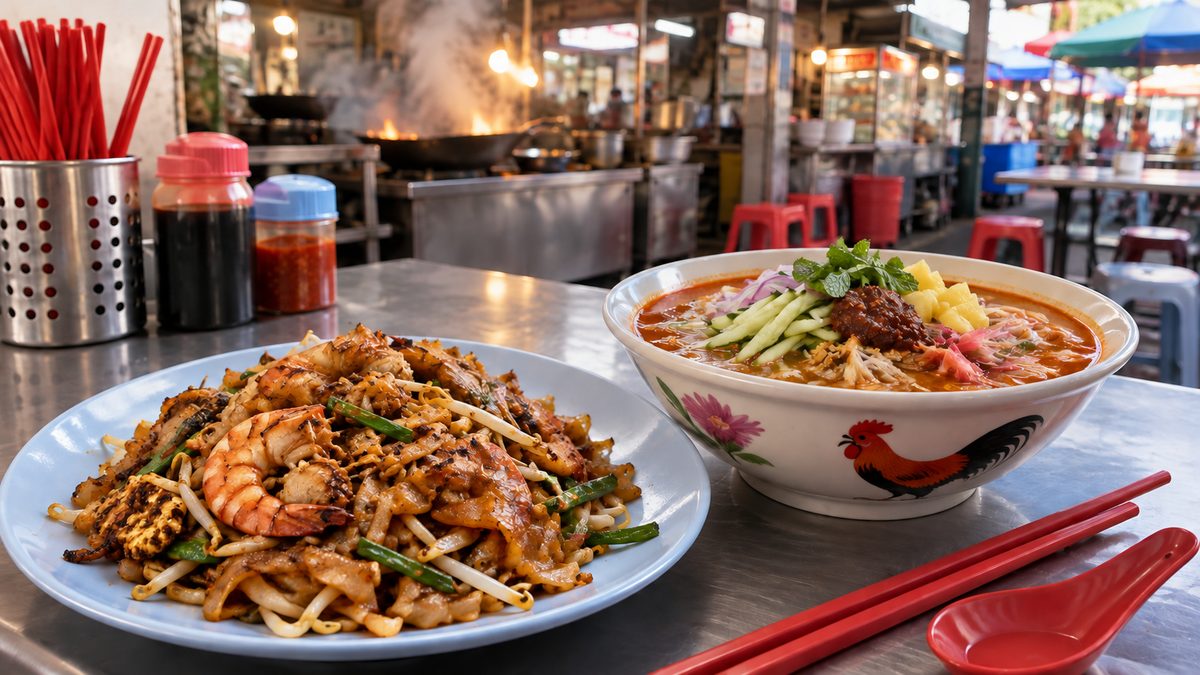
Char kway teow comes first for many people. It’s flat rice noodles fried over very high heat with prawns, cockles, bean sprouts, egg and Chinese chives. A good plate has a smoky taste from the hot wok, which locals call “wok hei”. Many stalls still fry it one plate at a time, so expect to wait a little.
Assam laksa is completely different. The fish broth is sour from tamarind and a bit spicy, and it’s topped with cucumber, onion, pineapple and mint. A spoon of thick, sweet shrimp paste goes on top. Air Itam is one area people often mention for this dish.
Then there’s Hokkien mee, which Penang people also call prawn mee. The noodles sit in a rich prawn broth with prawns, sliced pork or egg, bean sprouts and water spinach. It’s slightly spicy and very tasty.
Curry mee has a lighter, coconut-based curry soup with tofu puffs, cockles, prawns and cuttlefish. Some stalls add congealed pig’s blood, so ask first if you’d rather skip it.
Rice, Late Nights and Big Appetites
Nasi kandar is Penang’s famous late-night meal. You get a plate of steamed rice, then point at whatever you want: fried chicken, fish, squid, eggs or vegetables. The server pours mixed curry gravy over everything. When it’s drowning in gravy, it’s called “banjir”, which means flooded. Many shops stay open late, and it’s a common supper choice for locals.
Nasi lemak is loved all over Malaysia, but Penang has its own small twists. It’s coconut rice with sambal, peanuts, anchovies, egg and cucumber. Some stalls sell little wrapped packets that make a quick breakfast.
Chicken rice is the safe, comforting option. Pick steamed or roasted chicken, and don’t forget the chilli sauce.
If you’re up early, head to a mamak shop for roti canai with dhal or curry. It’s cheap, filling and goes perfectly with a hot drink. Mee goreng mamak, the spicy fried yellow noodles, is another favourite at any time of day.
Snacks to Share
Snacks are where a food trail gets fun, because you can order one plate and pass it around.
Oh chien is an oyster omelette made with small oysters, egg and a starchy batter. It’s fried until the edges go crispy and served with chilli sauce. Lor bak is a Nyonya-style meat roll wrapped in bean curd skin and deep-fried, eaten with a thick gravy. The same stalls usually sell prawn fritters and fried tofu too.
Pasembur is an Indian-Muslim salad of shredded cucumber, fried dough fritters, tofu, prawn fritters and egg. Everything is covered in a sweet and spicy peanut sauce. Penang rojak is another salad, but this one uses fruit and a thick, dark shrimp paste sauce with crushed peanuts. The sweet, sour and salty mix takes some people by surprise, in a good way.
Something Cold
Penang is hot, so you’ll want a cold dessert or drink between meals.
Cendol is the famous one: green rice flour jelly, coconut milk, palm sugar syrup and shaved ice. Some stalls add red beans. Ais kacang is a tall bowl of shaved ice with syrup, red beans, sweet corn, jelly and evaporated milk.
Don’t leave without trying nutmeg juice. Penang is known for growing nutmeg, and the drink is fresh and slightly sour. Of course, a teh tarik or kopi goes with pretty much anything.
Where the Locals Eat
You don’t need fancy restaurants here. The best food is usually at simple hawker stalls and old coffee shops.
George Town, the old city centre, is the natural place to start. Its heritage streets are part of a UNESCO World Heritage Site, and there are coffee shops on nearly every corner. Chulia Street in George Town has hawker stalls that open at night. Not far away, New Lane (Lorong Baru) turns into a busy street food area once the sun goes down.
Gurney Drive, by the sea, has a large hawker centre that’s lively in the evenings. Air Itam is worth the trip for assam laksa and the local markets.
Stalls sometimes change their opening days or move, so check recent reviews or ask someone local before you go.
If it’s your first time in an old Penang coffee shop, the system can feel a bit confusing. Usually you find a table first and note its number. Then you walk up to the stalls you want and order, telling them where you’re sitting. The food comes to your table, and you often pay when it arrives. Drinks are normally ordered from the coffee shop’s own counter or from someone who comes round to your table.
Making the Most of Your Food Trail
The trick is to eat small and often. Order one plate, share it with friends and move on. That way you can try far more dishes in a day. A few other habits help:
- Go early for breakfast stalls, and save some places for the night, since some only open after dark.
- Bring cash. Plenty of hawkers don’t take cards, though e-wallets are more common now.
- If you have allergies, ask the seller about ingredients before you order.
- Walk between stops so you’ve got room for the next meal.
For Muslim visitors, there’s lots of halal food on the island, especially nasi kandar, pasembur and Malay stalls. Look for halal signs or ask the seller if you’re not sure.
Don’t feel you have to chase only the famous names either. Some of the best plates come from a quiet stall with no signboard and a small group of regulars. If a place is full of locals, that’s usually a good sign.
Be ready to queue at the popular stalls. It can feel long in the heat, so keep a bottle of water with you. Most of the time the wait is worth it, and by the end of the day you’ll understand why people keep coming back to Penang hungry.


