Cables and wiring carry power and signals to every machine in your factory. When they’re chosen well, nobody thinks about them. When they’re chosen badly, they can cause breakdowns, fires and injuries. That’s why industrial cable selection deserves more attention than it usually gets.
You don’t have to be an engineer to follow this. It’s written for owners, managers and buyers who want to ask better questions. For any actual installation, though, always work with a licensed electrical contractor.
What Goes Wrong With the Wrong Cable
A cable looks simple, but it’s doing several jobs at once. It has to carry enough current without overheating. It has to survive heat, oil, water, chemicals and movement. And it has to meet the safety requirements for your type of building.
When it can’t cope, the insulation gets hot and starts to break down. That can lead to short circuits and electrical fires. Control signals may drop out, so machines behave strangely. Cables wear out early and need replacing again and again. You may even fail an inspection or run into trouble with your insurer. A bit more care at the buying stage avoids most of this.
The Main Types You’ll Come Across
Power and Control Cables
Power cables carry electricity from the main supply to switchboards, motors and machines. They come in different sizes and voltage ratings, and bigger machines usually need thicker cables that can carry more current.
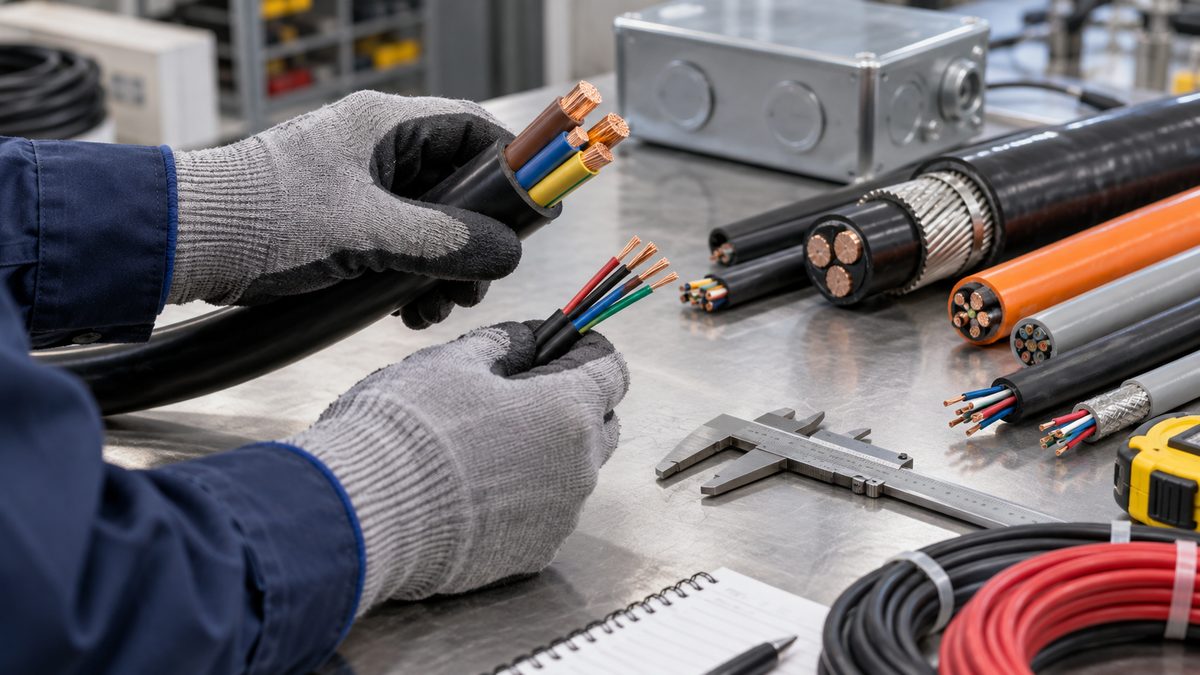
Control cables carry low-power signals between panels, sensors, switches and machines. They often have many small cores inside one outer sheath. They’re what tell your machines to start, stop and respond.
Instrumentation and Data Cables
These carry sensitive signals from measuring devices, or link computers and networks. Many have shielding, which is a layer of metal foil or braid that protects the signal from electrical noise. That noise often comes from nearby motors or power lines.
Armoured and Flexible Cables
Armoured cables have a layer of steel wire or tape for extra strength. You’ll see them where cables might be crushed, hit or buried, such as outdoor areas and busy factory floors.
Flexible cables are the opposite. They’re made to bend again and again, so they suit robots, cranes, moving machine parts and portable equipment. A normal fixed cable in the same spot may crack after a while.
Fire-Resistant and Low-Smoke Cables
Some cables are designed to keep working for a period during a fire, or to give off less smoke and toxic gas when they burn. They’re often used for fire alarms, emergency lighting and places where lots of people gather.
Questions to Answer Before You Buy
Gather clear facts about where each cable will go and what it has to do. Your electrician will need most of this anyway.
- What power does the equipment need, and at what voltage?
- How long is the run? Longer cables lose more voltage, so a bigger size may be needed.
- Will the cable sit near heat, or touch oil, water or chemicals?
- Does it move, bend or vibrate?
- Could forklifts or heavy loads hit it, or is it outside in the sun and rain?
- Will control or data lines run close to power cables?
The answers point you to the right sheath, the right protection and the right size. Moving parts need flexible cable and secure fixing. Busy areas may need armour, cable trays or conduit. Signal lines near power cables may need shielding.
Don’t Get Caught by Fake or Cheap Cable
Not every cable is made to the same standard. Poor-quality and fake cables are a real problem. Some use less copper than they claim, or weak insulation that fails early.
Ask your supplier which Malaysian and international standards the cable meets, and ask to see the supporting documents. Good cables usually have the maker’s name, size and voltage rating printed along the sheath, so check it. Reputable manufacturers can also give you test reports.
Buy from established distributors or approved dealers. If a price looks too good to be true, it probably is. Electrical work in Malaysia has to follow the rules set by the relevant authorities, and your licensed contractor should know the current requirements.
Getting the Installation Right
Even the best cable becomes dangerous if it’s put in badly. Only licensed, competent electricians should install or repair wiring. Beyond that, a few habits make a big difference:
- Don’t overload cable trays, because packed cables trap heat.
- Keep power and signal cables apart where you can.
- Use the correct glands, connectors and terminations for each cable type.
- Label both ends clearly so future maintenance is easier and safer.
- Protect cables where they pass through walls, floors or sharp edges.
After that, keep an eye on them. Look for cracks, burn marks, crushing and rat damage during your regular checks, and check more often in areas with heat, moisture, chemicals or heavy traffic.
What to Ask Your Supplier
When you’re comparing suppliers, ask each one the same things. Which standards and certifications does the cable meet? Is it suitable for your temperature and environment? Can they send technical data sheets and test reports? Do they keep stock, and how fast can they deliver? What warranty or after-sales support comes with it? The way a supplier answers tells you a lot about who you’re dealing with.
A Few Common Questions
Can I use household cables in my factory?
It’s not a good idea. Factories are harsher places, with more heat, more movement and heavier loads. Use cables rated for industrial use and approved by your electrician.
How do I know what size I need?
Size depends on the current, the length of the run, how the cable is installed and the temperature around it. That’s a calculation for a licensed electrical engineer or contractor, not something to guess.
A cable is one of the cheaper parts of any installation, and one of the hardest to replace once it’s inside a wall or ceiling. Take the time to choose it properly, buy from people you trust and let a licensed electrician do the work. Get those three right and you probably won’t have to think about your wiring for a long time.