Walk into almost any factory in Malaysia and you’ll find electricity near the top of the monthly bills. If you want to reduce factory energy cost, you don’t need a big budget or a brand new production line. A lot of the savings come from small changes in how you light, run and look after the plant you already have.
Most of what follows can start this month. Some of it costs nothing at all, and some of it needs a bit of planning. None of it works unless your team is on board, so we’ll talk about people too.
Walk the Floor First
Before you buy anything, find out where the power is going. Pick a normal working day, bring your maintenance lead and walk the whole site slowly. Then do it again after hours, when things should be quiet.
Take a notebook or your phone and look out for things like these:
- Lights left on in empty stores, offices or toilets
- Machines running with no production going on
- A hissing sound from air pipes, hoses or fittings
- Doors to cold rooms or air-conditioned areas left open
- Motors, panels or pipes that feel much hotter than usual
Snap photos and write down what you see. That list becomes your first action plan. If you want to go deeper, you can bring in a qualified energy auditor. An energy audit is a detailed study of how a building uses power, and the auditor will tell you what to fix first.
Lighting Is the Easy Start
Lighting changes are simple, and you see the results straight away. Older tubes and high-bay lamps use more power than LED lights, and they burn out sooner. You don’t have to change everything in one go. Many factories swap one area at a time, starting with the lights that stay on the longest.
Daylight is free, so use it. A lot of factories have roof panels or high windows covered in dust. Clean them and more light comes in. In bright corners, you may find you can switch some lights off during the day.
Motion sensors help in places people only pass through, like stores, corridors, toilets and loading bays. A simple timer can also switch off outdoor lights once the sun is up, so nobody has to remember.
That Hissing Sound Is Money
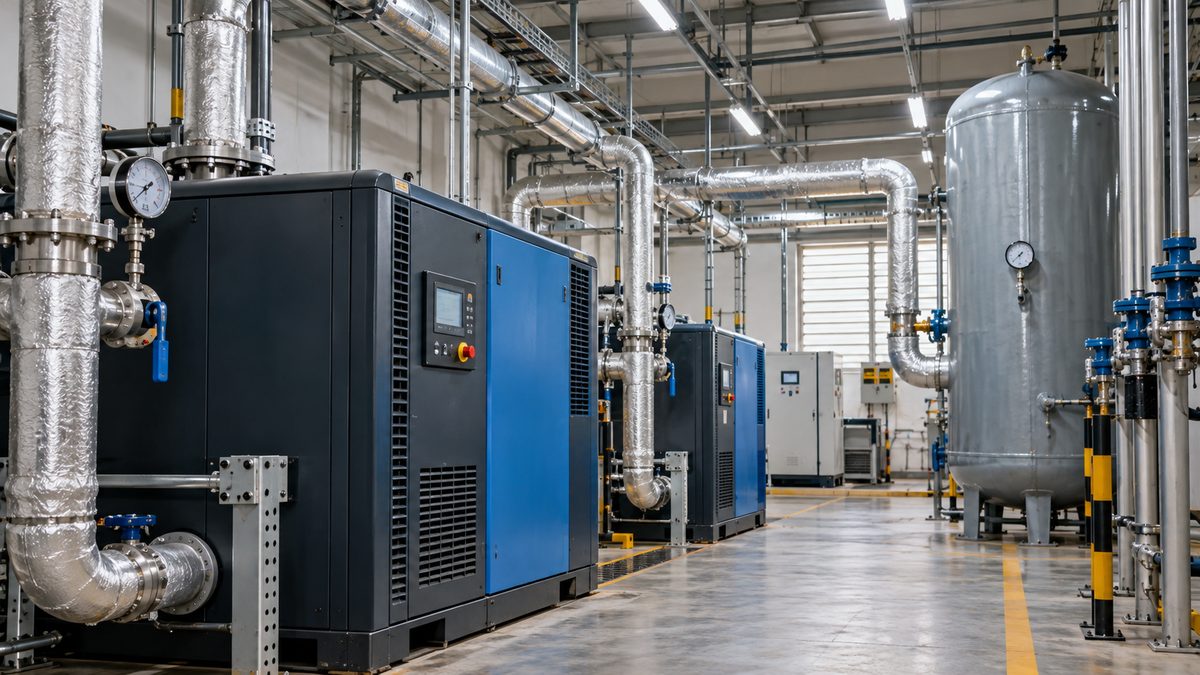
Compressed air is air that’s squeezed and stored under pressure to power tools and machines. It’s handy, but it takes a lot of electricity to make. Then much of it leaks away through problems nobody gets around to fixing.
Leaks are the big one. Small holes in hoses, joints and valves waste air all day and all night. Listen for them when the factory is quiet, maybe during a break or at the end of a shift. Tag each leak so it’s easy to find again, and get it repaired quickly.
Pressure is next. Many systems run higher than the machines really need, simply because someone set it that way years ago. Ask your technician to find the lowest safe pressure for your equipment. And if nothing needs air at night, switch the compressor off. A timer can do this for you.
Finally, watch how people use it. Workers sometimes blow air on themselves to cool down, or to dust off their clothes. It’s wasteful and it can hurt someone. A fan near the workstation or a simple brush is a safer choice.
Motors, Pumps and Fans
Motors drive almost everything on the floor, from conveyors to pumps and fans. Small gains here add up because there are so many of them.
Start with habits. Conveyors and fans often keep running during breaks and shift changes when nothing’s moving. Train staff to switch them off, and put a clear reminder near the switch.
If you have pumps or fans where the load changes during the day, ask about a variable speed drive. It’s a device that lets a motor run slower when full speed isn’t needed. When an old motor finally fails, ask your supplier about higher efficiency models. Compare the running cost over the motor’s whole life, as well as the price on the quotation.
Loose belts and parts that aren’t lined up properly also make motors work harder than they should. A quick check during routine maintenance keeps things running smoothly.
Put Waste Heat Back to Work
Compressors, boilers, ovens and furnaces all give off heat that usually just drifts into the air. Heat recovery means catching some of that heat and using it again.
Heat from a compressor can sometimes warm water for cleaning or for a process. Hot exhaust from a boiler can pre-heat the water going into it, so the boiler burns less fuel for the same job. It isn’t right for every site, though. It works best when you have a steady source of waste heat and a nearby use for it at the same time. Get an experienced engineer to study your processes before you spend money on it.
Maintenance Saves Power Too
Dirty, worn or badly adjusted equipment uses more power to do the same work. So good maintenance is also one of your best energy saving habits.
Add these jobs to your regular schedule:
- Clean filters on compressors, air-conditioners and fans
- Clean coils on chillers and cooling units
- Repair damaged insulation on hot and cold pipes
- Check door seals on cold rooms and ovens
- Inspect electrical panels for loose or overheating connections
Lubricate bearings and moving parts as the maker recommends, and keep a simple log of every job. After a few months, you’ll see which machines need the most attention. That helps you plan repairs before they turn into expensive breakdowns.
People Make the Difference
Machines don’t waste energy on their own. People switch them on, set them up and walk away. So your team matters as much as any upgrade.
Tell staff what you’re trying to do and why. Keep it simple: using less power helps the business stay healthy, and that’s good for everyone. Put reminders near switches and machines. Ask the operators for ideas, because they usually know exactly where the waste happens. Some factories also pick an energy champion for each area, someone who reminds others to switch off and reports problems.
If you’re not sure where to begin, keep it small. Do the walkthrough, fix the leaks, sort out the lights and make maintenance a habit. Once those are done, bigger jobs like motor upgrades and heat recovery become much easier to plan, because you’ll already know where your power goes.