Factories and warehouses are busy places. Forklifts move between high shelves, machines run all day and chemicals sit in the store. Accidents can happen in a second. These factory safety tips cover the basics every site should have in place.
Good safety habits protect your workers, keep production running and show staff that you actually care about them. An accident can change someone’s life. It can also stop work, damage equipment and hurt your company’s name. People who feel unsafe at work lose focus, and good staff eventually leave.
Employers in Malaysia have a legal duty to provide a safe workplace. The exact rules can change, so check the current occupational safety and health requirements with the relevant authorities. If you’re not sure about something, talk to a qualified safety officer or consultant.
The Right Protective Gear
Personal protective equipment, or PPE, is the gear workers wear to protect themselves from hazards. It’s the last line of defence. It should back up safer machines and good work methods, not replace them.
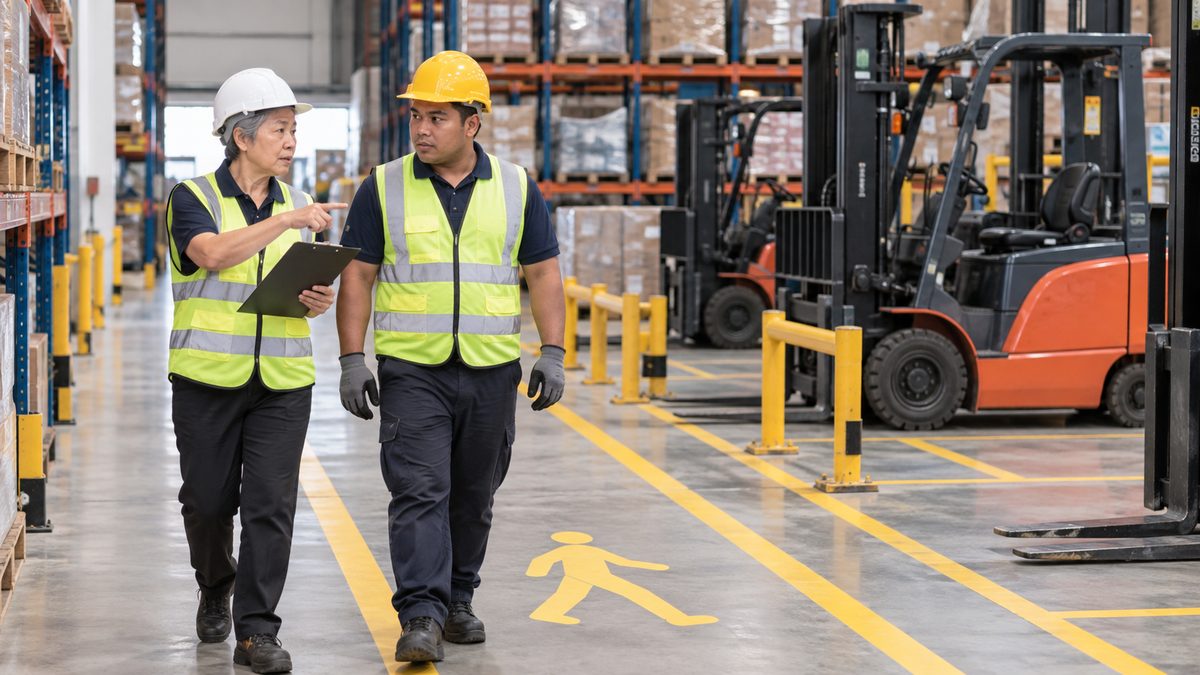
What you need depends on the job. Helmets matter where things can fall or people can hit their heads. Safety shoes protect feet from heavy loads, sharp items and slippery floors. Gloves should suit the task, whether that’s cutting, heat or chemicals. Grinding, welding and chemical work need safety glasses or a face shield. Noisy areas need earplugs or earmuffs. Anyone walking where forklifts and lorries move should wear a high-visibility vest, and dusty areas or places with fumes need masks or respirators.
Buying the gear is the easy part. Getting people to wear it properly is harder, and a few things help:
- Choose PPE based on the real hazards of each job.
- Make sure it fits. Loose gloves and helmets that slip don’t protect anyone.
- Show staff how to wear, clean and store it.
- Replace damaged items straight away.
- Supervisors and managers wear it too, every time they’re on the floor.
Signs and Floor Markings
Safety signs give quick warnings and instructions to workers, visitors and contractors. You’ll want warning signs for hazards like high voltage, hot surfaces and chemicals. Mandatory signs tell people what they must do, such as wear ear protection. Prohibition signs cover what’s not allowed, like smoking. Emergency signs show the exits, first aid kits, eye wash stations and assembly point, and fire equipment signs show where the extinguishers and hose reels are.
In warehouses, floor markings are just as useful. Paint lines or use tape to separate walkways from forklift routes. Mark the spaces that must stay clear, like the areas in front of exits, electrical panels and fire equipment.
Keep signs clean and easy to see. Many Malaysian sites have workers who speak different languages, so pictures help, and signs in more than one language are worth considering.
Training That People Remember
Gear and signs only work if people know what to do. Every new worker should get an induction covering site rules, hazards, emergency exits and who to call. Only trained and authorised staff should drive forklifts or run machines.
Beyond that, make sure your training covers the everyday risks:
- Safe lifting, carrying and pushing, to prevent back injuries
- Chemical labels, safe storage and what to do if something spills
- Fire drills and first aid arrangements
- How to report hazards and near misses
A near miss is an event that could have hurt someone but didn’t. These reports are very useful, because they show you where the next accident might happen.
Keep sessions short and practical. Show people rather than just telling them, and use real examples from your own floor. Record who’s been trained and when their refresher is due.
Don’t forget the people who aren’t on your payroll. Contractors, cleaners, delivery drivers and visitors walk through your site too, often without knowing where the dangers are. A short briefing at the guardhouse or reception, plus a visitor vest and a clear walkway, helps keep them safe. Temporary and part-time workers need the same induction as permanent staff, even if they’re only with you for a busy season.
Walk the Site Regularly
Hazards appear all the time. A pallet gets left in a walkway. A guard comes off for a repair and never goes back on. Someone moves a fire extinguisher to make space. Regular inspections catch these before they hurt anyone.
Use a simple checklist so nothing is missed. It might include:
- Walkways and exits are clear
- Machine guards are in place and working
- Racking isn’t overloaded or damaged
- Forklifts are checked before each shift
- Cables, plugs and panels aren’t damaged
- Fire extinguishers and alarms are in place and serviced
- Chemicals are labelled and stored properly
- First aid kits are stocked
How often you check depends on your site and its risks. Daily checks by supervisors plus a more detailed walk on a fixed schedule is a sensible start, and a safety professional can help you decide. Whatever you find, write it down, give each issue an owner and a target date, and follow up until it’s fixed. Even a small warehouse with a handful of staff needs this. Falling goods, forklifts and fire are just as dangerous in a small space.
It Comes Down to Culture
The safest sites share one thing. People look out for each other and speak up without fear. The employer provides safe equipment and training, and workers follow the rules and use their PPE. Both sides own it.
You build that by thanking people who report problems and never punishing them for honest reports. Bring workers into safety meetings and ask what they think. Act quickly when someone raises a concern. And make safety a normal topic in daily talks, instead of something you only mention after an accident.
Pick one area this week, maybe the loading bay or the chemical store, and start there. A few small changes done properly will do more than a big plan nobody reads. If you found this useful, we write about plenty of other practical topics for Malaysian businesses here on Human Web, so feel free to look around.