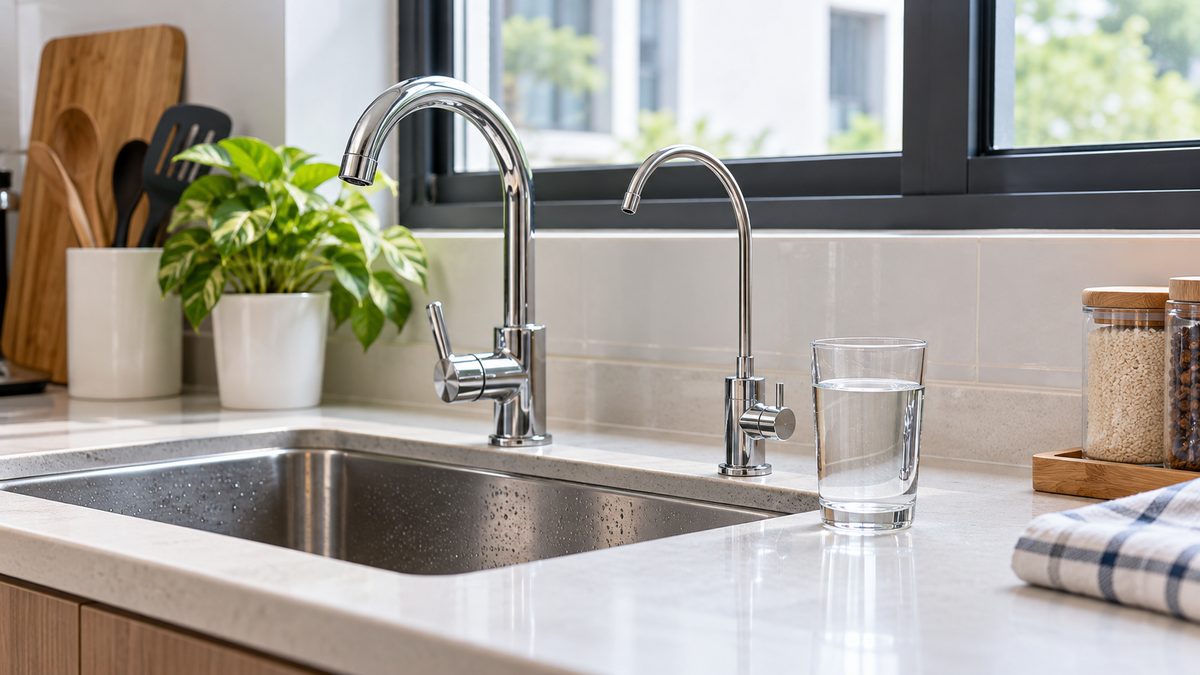
Most of us want clean, good-tasting water at home. That’s why so many Malaysian households now have a filter at the kitchen sink, a dispenser on the counter or even a big unit outside the house. This water filter guide walks you through the main options so you can pick one that actually suits your family.
We won’t be recommending brands. Brands come and go, and sales talk changes every year. Instead, you’ll learn how the common filters work, what to ask a seller and how to look after your filter once it’s in.
Why Filter Tap Water at All?
Tap water is treated before it reaches your home. But after that, it still travels through long pipes and often sits in a roof tank before it comes out of your tap. Along the way it can pick up dirt, rust or sediment. Sediment is just tiny bits of sand, mud and other particles.
For most families, the reasons are simple. They want water that tastes and smells better, with less visible dirt. Some are tired of carrying cases of bottled water up the stairs. Others want to stop dirt building up inside the kettle and washing machine. Work out which of these matters most to you, because it points you to the right type of filter.
Take a Good Look at Your Own Water
Before you buy anything, pay attention to your water for a week or so. Does it turn cloudy or brownish now and then, especially after a water cut? Is there a strong smell? Is there a layer of grit at the bottom of your kettle?
Your house matters too. Older homes may have older pipes. If your roof tank hasn’t been cleaned in years, that can affect what comes out of the tap. Some sellers offer to test your water. If you take up the offer, ask what the test actually checks and ask them to explain the results in plain words.
And if you’re worried about your water and your family’s health, speak to a qualified doctor or a proper water quality professional. A filter salesperson shouldn’t be the one giving you health advice.
How the Main Filter Types Work
There are a handful of filter types you’ll keep seeing in shops and online. Many systems combine two or more of them.
Sediment Filters
These catch the bigger stuff: sand, rust and dirt. They’re often the first stage in a system, and they protect the other filters from getting clogged too quickly.
Activated Carbon Filters
Activated carbon is a special form of carbon that traps certain substances. It’s mainly used to improve taste and cut down smells, like the smell of chlorine. Most kitchen filters include a carbon stage somewhere.
Reverse Osmosis
Reverse osmosis, or RO, pushes water through a very fine layer called a membrane. This removes many small substances. RO systems usually have several stages and often need a storage tank. They also tend to produce some waste water while filtering, so ask about that.
UV Filters
Ultraviolet, or UV, filters treat water using a special light. They’re usually added alongside other filters rather than used alone, and they need electricity to run.
Outdoor or Whole-House Filters
These are fitted where the water pipe enters your home, so they filter water for every tap, shower and washing machine. They’re mainly there to cut down sediment before it spreads through the house.
Matching a Setup to Your Home
There’s no single best filter for everyone. It depends on your needs, your space and your budget.
If you live alone or rent a small place, a tap or jug filter is simple and doesn’t touch the plumbing. Families who want filtered water for drinking and cooking often go for an under-sink unit, which stays hidden in the kitchen cabinet. Countertop dispensers sit on the kitchen top, and some give hot and cold water, which is nice in our weather. An outdoor filter protects the whole house from sediment, and many people pair it with a kitchen filter for drinking water.
Renting? Check with your landlord before changing any plumbing. A portable filter you can take with you when you move is often the easier choice.
What to Ask the Seller
Compare at least a few options, and don’t let anyone rush you. Bring these questions along:
- What does this filter reduce, and how do you know?
- How often do the filter parts need changing, and are replacement parts easy to buy?
- Does it need electricity or a storage tank?
- Is installation included, and who does it?
- What does the warranty cover, and is after-sales service available in my area?
Be wary of sellers who try to scare you into a quick decision. A good one explains things clearly and gives you time to think. Always ask for a written quotation and read it properly before signing anything.
Looking After It
A filter only does its job if you look after it. An old, clogged filter won’t work properly, and in some cases it can even make your water worse than having no filter at all.
Change the filter parts as often as the maker recommends, and write down the date every time. Wipe the outside of the unit and the tap now and then. Notice if the taste, smell or water flow changes, because that’s often the first sign something needs attention. If your system needs regular servicing, book it. And don’t forget the roof tank. Get it cleaned from time to time, or ask a professional to do it.
Many companies offer service plans with reminders, which helps if you tend to forget. It’s still smart to keep your own record, though, so you’re not depending entirely on a phone call from the company.
A Few Common Questions
Can I install a water filter myself?
Tap and jug filters, yes, easily. Under-sink, RO and outdoor systems usually involve plumbing work, so a trained installer is the safer choice.
How do I know it’s time to change the filter?
Go by the maker’s schedule first. Between changes, watch for slower flow, an odd taste or a bad smell. If you’ve kept a written record of past changes, you’ll always know when the next change is due.